What Are Merchant Bars?
Merchant bars are a broad category of steel products commonly used in construction, fabrication, engineering, and manufacturing projects. They are supplied in standard shapes and sizes and are valued for their versatility, strength, and ease of fabrication.
Merchant bars are widely specified for structural frameworks, supports, brackets, and general-purpose steel applications across commercial, industrial, and infrastructure projects.
Selecting the correct material is also important, as different structural grades offer varying strength and performance — you can explore this in our guide on steel grades (S275 vs S355 vs S460).


Types of Merchant Bars
Merchant bars are available in several standard profiles, each designed for specific structural and fabrication needs.
Angle Bars:
Angle bars are L-shaped steel sections used where strength and support are required at corners or joints. They are commonly applied in frames, supports, shelving systems, and structural reinforcements.
Steel angle sections provide excellent load-bearing capacity while remaining easy to cut, weld, and fabricate.
Flat Bars:
Flat bars are rectangular steel sections widely used in fabrication, construction, and manufacturing. They are ideal for brackets, base plates, supports, and general structural components.
Their uniform thickness and flat surface make them suitable for welding, machining, and drilling.
Round Bars:
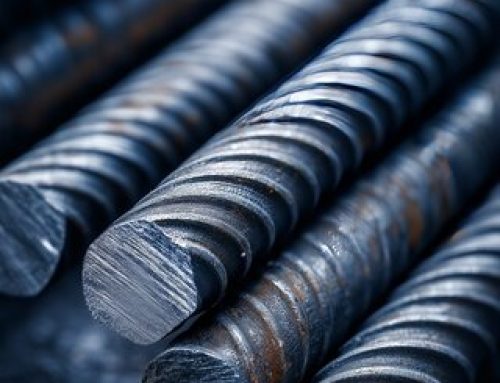
Round bars are cylindrical steel products commonly used in machining, forging, and precision engineering applications. They offer consistent strength and are often specified for shafts, pins, bolts, and mechanical components.
Round bars are valued for their smooth finish and dimensional accuracy.
Square Bars:
Square bars feature equal-width sides and are frequently used in architectural, decorative, and structural applications. They provide balanced strength and are easy to handle in fabrication processes.
Square steel sections are often selected for frames, grills, supports, and custom metalwork.
Merchant Bars Comparison – Which Type Should You Choose?
| Type | Shape | Best For | Key Advantage |
|---|---|---|---|
| Angle Bars | L-shape | Frames, supports, corners | High structural strength |
| Flat Bars | Rectangular | Base plates, brackets | Easy to weld & fabricate |
| Round Bars | Circular | Shafts, bolts, machining | Precision & smooth finish |
| Square Bars | Square | Frames, grills, fabrication | Balanced strength |
Selecting the right merchant bar depends on the application, load requirements, and fabrication process. For structural support, angle bars are typically preferred, while flat bars are widely used in fabrication. Round and square bars are more common in machining and custom engineering applications.
Common Applications of Merchant Bars
Merchant bars are used across a wide range of industries, including:
- Construction and structural frameworks
- Fabrication and metalworking
- Infrastructure and engineering projects
- Industrial machinery and equipment
- Architectural and decorative steelwork
Their adaptability makes them a core material in both small-scale and large-scale projects.
How Merchant Bars Relate to Steel Grades and Tolerances
Merchant bars are typically produced in structural grades such as S275 and S355, where strength and compliance are critical. Understanding steel grade differences and dimensional tolerances helps ensure correct material selection and avoids fabrication issues.
Specifications and Standards
Merchant bars are typically supplied in accordance with international standards such as EN, ASTM, and BS, depending on project requirements. They are available in various grades, sizes, and lengths to meet structural and fabrication specifications.
Material selection should always consider load requirements, environmental conditions, and compliance standards.
Typical Supply Conditions for Merchant Bars
Merchant bars are commonly supplied under the following conditions:
- Grades: S235, S275, S355
- Lengths: 6m, 12m (custom lengths available)
- Standards: EN 10025, ASTM equivalents
- Certification: EN 10204 3.1 available
- MOQ: Typically 1×20’ container (≈25 tons)
How to Choose the Right Merchant Bar
Choosing the correct merchant bar is critical for performance, cost efficiency, and ease of fabrication. Buyers should consider:
- Load requirements → Structural vs non-structural use
- Fabrication method → Welding, machining, or bending
- Shape suitability → Each profile serves a different purpose
- Steel grade → S235 vs S275 vs S355
- Tolerance requirements → Especially for precision applications
For example:
- Use angle bars for structural frames
- Use flat bars for plates and supports
- Use round bars for machining parts
- Use square bars for balanced structural and decorative use
Why Choose CoreMet Steel for Merchant Bars
CoreMet Steel supplies angle, flat, round, and square bars directly from trusted mills in Turkey and Europe.
We support buyers with:
- Direct mill sourcing (competitive pricing)
- Full certification (EN 10204 3.1)
- Flexible supply options (FOB, CFR, CIF)
- Reliable delivery for international projects
- Experience across construction, fabrication, and industrial sectors
Industry Standards and Further Guidance
Guidance on inspection documents and certification standards is provided by organisations such as the British Standards Institution (BSI), which oversees the adoption of EN standards in the UK. For global steel standards and industry insights, buyers can also refer to the World Steel Association.
Merchant Bars Supply in the UK and Global Markets
Merchant bars are widely supplied across the UK and international markets, supporting construction, fabrication, and industrial applications. CoreMet Steel supplies merchant bars globally with certified materials, competitive pricing, and reliable delivery from trusted mills.
Speak to CoreMet Steel
Sourcing the right merchant bars requires the correct combination of shape, grade, and certification.
Contact CoreMet Steel for:
- Grade selection advice
- UK & international sourcing
- Competitive quotes with certification
get a free quote
Built for reliable steel supply.projects.trade.sourcing.partnerships.
From steel coils to fencing systems: sourcing quality materials for global buyers, projects, and distributors.