
Our approach is designed to maximizing steel productivity and operational efficiency.
CoreMet Steel
Hot Rolled Steel Sheet & Plate Supplier UK & Global
CoreMet Steel is a trusted supplier of hot rolled steel sheets and plates across the UK and global markets. Each sheet is manufactured to exacting standards, ensuring excellent strength, toughness, and workability. Moreover, our hot rolled plates are ideal for applications requiring durability, weldability, and dimensional accuracy.
What Is Hot Rolled Steel Sheet & Plate?
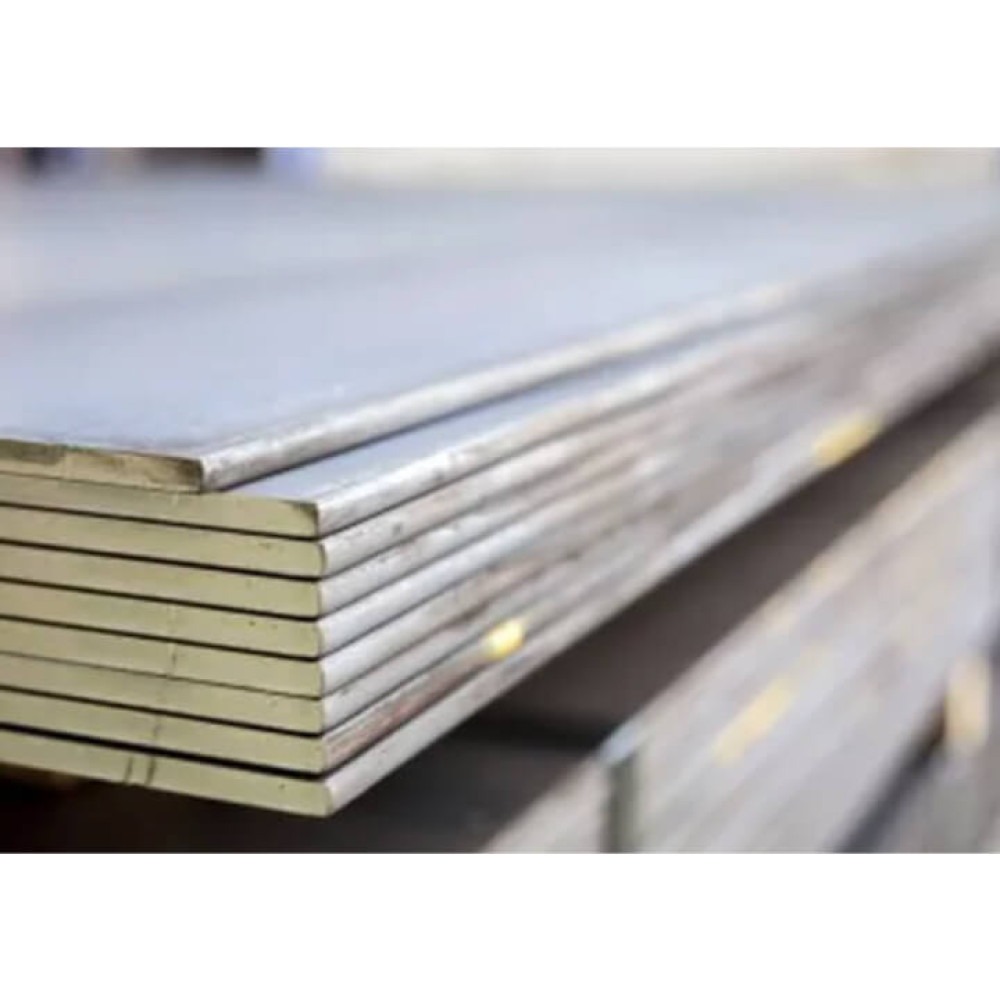
Hot rolled steel sheet and plate are flat steel products produced by rolling steel at high temperatures, typically above 1,000°C. At these temperatures, the steel is easier to shape and form, allowing it to be rolled into sheets and plates with excellent strength and durability.
Hot rolled steel sheets are generally supplied in thinner gauges for fabrication, structural, and general engineering applications, while hot rolled steel plates are thicker sections designed for load-bearing and heavy-duty uses. Due to the hot rolling process, these products typically have a mill-scale surface finish and slightly rounded edges.
Hot rolled sheet and plate are widely used where strength, toughness, and cost efficiency are more important than tight dimensional tolerances or surface finish. Their excellent weldability and formability make them ideal for construction, structural steelwork, industrial fabrication, machinery, and infrastructure projects.
Why Choose CoreMet As Your Hot Rolled Sheet Supplier?
✅ High Strength & Toughness: Ideal for structural, heavy-duty, and load-bearing applications
✅ Excellent Weldability: Suitable for fabrication, cutting, and forming processes
✅ Cost-Effective Material: Lower processing cost compared to cold rolled alternatives
✅ Wide Size Range: Supplied in multiple thicknesses, widths, and plate dimensions.
✅ Global Export Expertise: Fast, reliable supply across the UK, Europe, Africa, and the Middle East.
Hot Rolled Sheet & Plate Specifications
Our hot rolled steel sheets and plates are supplied in accordance with internationally recognised standards to ensure consistent mechanical strength, weldability, and structural performance.
Common standards include:
- EN 10025 – S235JR, S275JR, S355JR
- EN 10111 – DD11, DD12, DD13
- ASTM A36 – Structural carbon steel
- ASTM A1011 / A1011M – Commercial and structural grades
Typical supply options:
- Thickness: 1.2 mm – 20.0 mm
- Width: Up to 2,000 mm
- Length: Cut-to-size sheets or stock plates
- Surface condition: As rolled, pickled & oiled
- Edge condition: Mill edge or trimmed
Material certification and mill test certificates are available on request. For applications requiring tighter tolerances or improved surface finish, our Cold Rolled Sheet & Plate range is also available.
Applications of Hot Rolled Sheets and Plates
- Structural beams and steel frameworks
- Bridges and heavy construction components
- Shipbuilding and offshore platforms
- Agricultural and industrial machinery
- Automotive chassis and parts
Related Steel Coil Products
- Hot-dip galvanized coils (HDG)
- Galvannealed coils for automotive
- Pre-painted galvanized coils (PPGI)
- Zinc-aluminium coated steel coils
Benefits of Hot Rolled Steel Sheets and Plates
✅ Outstanding strength and durability
✅ Excellent weldability and machinability
✅ Cost-effective solution for large-scale fabrication
✅ Suitable for painting, galvanizing, and further fabrication processes
✅ Sustainable and recyclable material
Common grades include S235JR, S275JR, and S355JR according to EN 10025, widely used in structural and engineering applications. ASTM A36 and ASTM A1011 grades are also commonly supplied for fabrication and industrial projects.
Hot Rolled vs Cold Rolled Steel Sheets – Key Differences
While teardrop patterned sheets are manufactured using hot rolled steel, it is helpful to understand how hot rolled and cold rolled sheets differ for different applications:
Hot Rolled Steel Sheets
- Produced at high temperatures for improved formability and toughness
- Ideal for heavy-duty, load-bearing, and structural applications
- Slightly rougher surface finish suitable for industrial use
- More cost-effective for thicker plates and large-scale fabrication
- Commonly used for patterned, checker, and flooring plates
Cold Rolled Steel Sheets
- Processed at room temperature for tighter dimensional tolerances
- Smooth, precision surface finish suitable for painting and coating
- Higher tensile strength but reduced ductility compared to hot rolled
- Better suited for decorative, automotive, and light fabrication uses
- Not suitable for raised patterned or checker plate production
For applications requiring enhanced slip resistance and structural durability, hot rolled patterned steel sheets remain the preferred solution.
| Feature | Hot Rolled Steel | Cold Rolled Steel |
|---|---|---|
| Manufacturing | Rolled at high temperatures above 1,000°C | Processed at room temperature |
| Surface Finish | Rougher mill-scale surface | Smooth precision surface |
| Cost | Lower production cost | Higher due to additional processing |
| Strength | Good structural strength | Higher tensile strength |
| Applications | Structural steel, heavy fabrication | Precision parts, automotive |
Related Steel Coil Products and Processing Options
Hot Rolled Steel Sheet Plate FAQ
Common grades include S235JR, S275JR, and S355JR under EN 10025, as well as ASTM A36 and ASTM A1011 for structural and fabrication applications.
Hot rolled steel is produced at high temperatures, giving it improved formability and lower cost, while cold rolled steel is processed at room temperature to achieve tighter tolerances and smoother surface finish.
Hot rolled steel sheets and plates are commonly used in structural steelwork, construction, machinery, shipbuilding, and heavy fabrication due to their strength and cost-efficient production process.
For more technical details on hot rolled steel specifications and applications, visit SteelConstruction.info.
get a free quote
Built for reliable steel supply.projects.trade.sourcing.partnerships.
From steel coils to fencing systems: sourcing quality materials for global buyers, projects, and distributors.