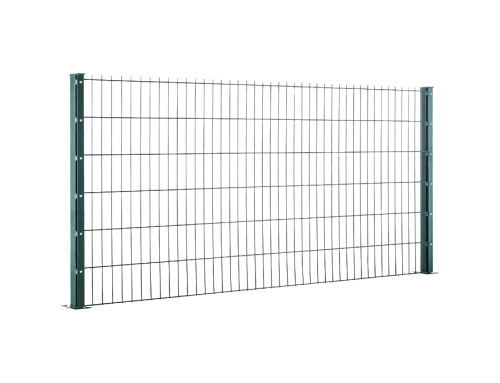
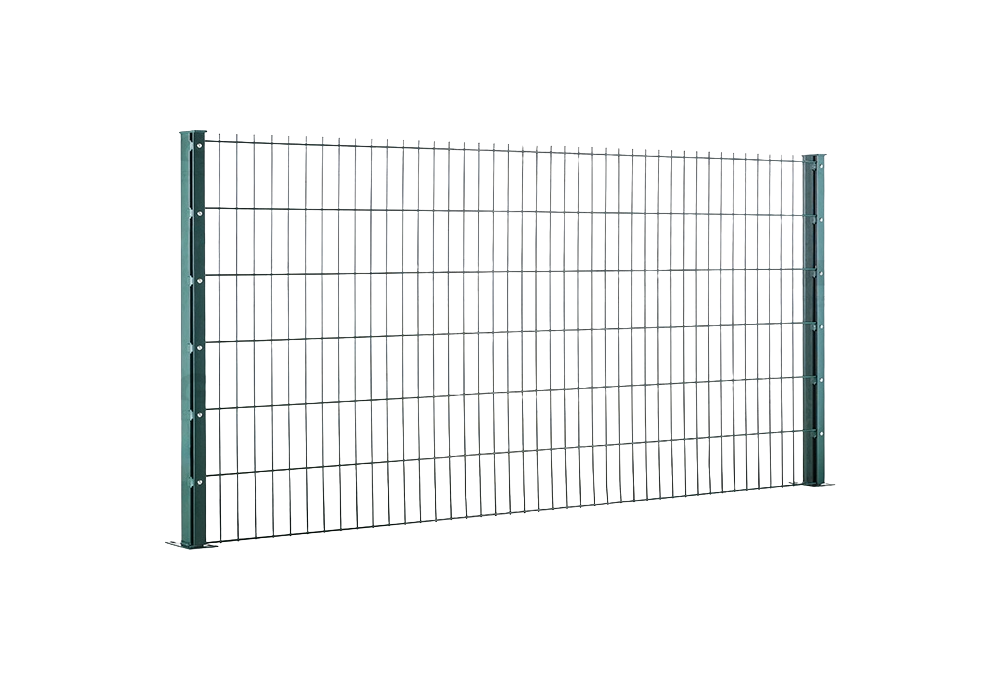
2D fence panels are widely used in industrial, commercial, and infrastructure projects where higher strength and durability are required compared to standard mesh systems. Among these, the two most common specifications are 656 and 868 panels.
While both belong to the same “double wire” fencing category, they differ significantly in strength, application, and cost. Choosing the wrong specification can either increase your project cost unnecessarily or result in insufficient security performance.
If you are comparing other systems, you may also review 3D fence panels to understand lighter alternatives.


What Is 2D Fence (Double Wire Fence)?
2D fence panels are constructed using vertical wires combined with two horizontal wires welded on each side. This “double wire” structure provides significantly higher rigidity compared to single-wire mesh systems.
Unlike chain link fence, 2D panels do not flex easily, making them more suitable for high-security environments.
These panels are commonly used for:
- Industrial facilities
- Warehouses and logistics centres
- Data centres and infrastructure
- Airports and railways
- High-security perimeter fencing
What Does 656 and 868 Mean?
The numbers refer directly to the wire configuration used in the panel:
- 656 = 6mm vertical wires + 5mm double horizontal wires
- 868 = 8mm vertical wires + 6mm double horizontal wires
This difference may look small, but it has a major impact on strength, durability, and cost.
Key Differences Between 656 and 868 Fence Panels
868 panels are significantly stronger due to thicker wires, making them more resistant to impact, cutting, and bending.
| Feature | Typical Wire Diameter | Application |
|---|---|---|
| Vertical wire | 6 mm | 8 mm |
| Horizontal wires | 2 × 5 mm | 2 × 6 mm |
| Strength | High | Very high |
| Weight | Medium | Heavy |
| Cost | Lower | Higher |
| Typical use | Standard industrial | High-security sites |
Thicker wires provide better durability but increase cost, so selection should always align with project risk level and expected lifespan.
Strength and Security Comparison
The main reason buyers choose between 656 and 868 is security level.
656 panels already offer strong rigidity and are suitable for most industrial applications. However, 868 panels are designed for environments where security risks are higher.
868 is typically preferred for:
- Critical infrastructure
- Airports and transport hubs
- Military or restricted facilities
- High-value storage sites
For even higher protection, some projects combine 868 panels with razor wire or barbed wire to create a layered security system.
Cost Differences: 656 vs 868
Cost is one of the biggest deciding factors.
868 panels use significantly more steel, which directly increases:
- Material cost
- Transport weight
- Installation effort
656 panels are more cost-efficient and are often selected when:
- Security requirements are moderate
- Large perimeter coverage is needed
- Budget constraints are important
To understand raw material influence, you can also review steel price per ton, which directly impacts fencing costs globally.
When to Choose 656 Fence Panels
656 panels are the most commonly used option for general industrial fencing.
They are suitable when:
- Standard perimeter security is sufficient
- Large areas need to be fenced cost-effectively
- Visual appearance and functionality are balanced
Typical applications include:
- Warehouses
- Factories
- Commercial buildings
- Schools and public spaces
If your project prioritises cost-efficiency, 656 is usually the best choice.
When to Choose 868 Fence Panels
868 panels are designed for high-security and long-term durability.
They are recommended when:
- Security risks are high
- Physical impact resistance is required
- Long lifespan is critical
- Compliance standards are strict
Compared to palisade fencing, 868 offers a more modern appearance while still providing strong protection.
2D vs Other Fence Types
Understanding alternatives helps buyers make better decisions.
- Compared to 3D fence panels, 2D panels are stronger but heavier and more expensive
- Compared to 358 mesh fencing, 2D panels offer less anti-climb protection but better visibility
- Compared to chain link fence, 2D panels provide significantly higher rigidity and security
Each option should be selected based on project-specific requirements.
Installation and Practical Considerations
2D fence panels require stronger posts and fixings due to their weight and rigidity.
Key considerations include:
- Proper post spacing and foundation
- Strong clamps and fixing systems
- Ground conditions and terrain
- Transport and handling requirements
Heavier panels like 868 may increase installation time and labour cost, which should be included in total project budgeting.
Common Buyer Mistakes
Many buyers make incorrect decisions when selecting between 656 and 868.
Common mistakes include:
- Choosing 868 when 656 is sufficient (over-specification)
- Choosing 656 for high-security environments (under-specification)
- Ignoring installation and transport costs
- Not considering long-term durability
A balanced approach based on risk, cost, and project scope is essential.
Conclusion
Both 656 and 868 fence panels are reliable and widely used solutions, but they serve different purposes.
- 656 = cost-effective, general use
- 868 = high-security, heavy-duty
The correct choice depends on your project’s security requirements, budget, and long-term expectations.
Speak to CoreMet Steel
Selecting the right fencing specification is critical for both cost control and security performance.
Contact CoreMet Steel for:
- 2D 656 and 868 fence panel supply
- Project-specific recommendations
- Global sourcing and competitive pricing
- Complete fencing systems including posts and accessories
We help buyers choose the right fencing solution based on real project requirements, not just specifications..
Fencing systems used in security and construction projects are typically designed in line with international standards to ensure durability, safety, and long-term performance. Guidance on materials, coatings, and structural requirements can be found from organisations such as the British Standards Institution (BSI).
get a free quote
Built for reliable steel supply.projects.trade.sourcing.partnerships.
From steel coils to fencing systems: sourcing quality materials for global buyers, projects, and distributors.